
Conservatory Foundations: A Guide for Roof Replacement Projects
Conservatory foundations determine which roof replacement system is suitable - a free structural survey assesses load-bearing capacity before any roof replacement work begins. The topic of foundations often causes unnecessary anxiety for homeowners considering a conservatory roof upgrade. In practice, the vast majority of conservatories in Liverpool and Merseyside have foundations that are perfectly adequate for modern lightweight tiled roof systems. This guide explains what foundation types exist, what the relevant load requirements are, and what happens in the small number of cases where additional work is needed.
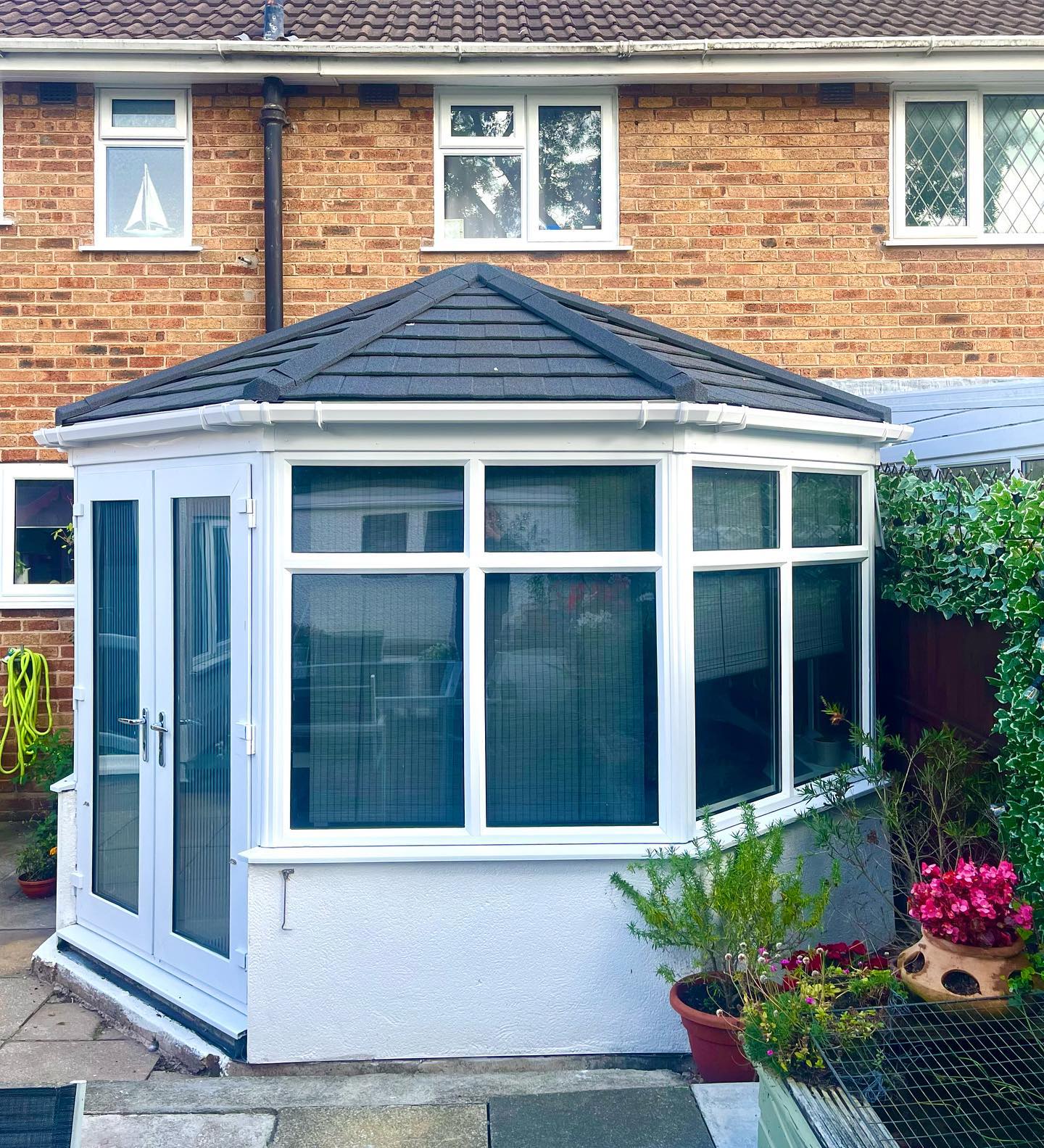
What Type of Foundations Does a Conservatory Have?
Conservatories are built on one of three main foundation types, and the type used depends largely on when the conservatory was built and who constructed it.
Strip foundations
The most common foundation type for conservatories built since the mid-1980s. Strip foundations consist of a continuous concrete strip running beneath all load-bearing walls - typically 450mm wide and 450mm deep in non-clay soils. They distribute the load of the structure along the full perimeter. Well-built strip foundations at adequate depth comfortably support the loads imposed by modern lightweight tiled roof systems.
Pad foundations
Isolated concrete pads at specific structural load points, sometimes used where the conservatory frame is supported on posts rather than continuous dwarf walls. Pad foundations are less common in residential conservatories but can be found in some timber-framed or aluminium-framed structures. They require careful assessment to confirm load capacity at each point.
Raft foundations
A continuous concrete slab covering the entire footprint of the conservatory, providing a uniform base. Raft foundations are sometimes used where ground conditions are variable or where the conservatory was built over an existing paved area. They typically provide good load distribution but the slab thickness and reinforcement specification determines actual capacity.
Conservatories built before 1970 or added informally without building control oversight may have shallow or ad hoc foundations that require more careful assessment. Post-1990 conservatories built to building regulations are almost always adequate.
How Do Foundations Affect Conservatory Roof Replacement?
The relevant question is not whether foundations exist, but whether they can carry the increased load of a replacement roof system without excessive settlement or movement.
A polycarbonate roof weighs 3 to 5 kg per square metre. A modern lightweight tiled system such as Leka weighs 25 to 30 kg per square metre - an increase of roughly 22 to 25 kg per square metre. On a 15m2 conservatory roof, that represents an additional 330 to 375 kg distributed across the structure's perimeter and transferred to the foundations.
For strip foundations at 450mm wide and 450mm deep in granular soil, a load increase of this magnitude is well within acceptable bearing capacity. The soil bearing capacity of typical suburban ground in Merseyside is sufficient to accommodate these loads without movement. Problems arise primarily in two scenarios: very shallow foundations (less than 300mm depth) and expansive clay soils where seasonal shrinkage and swelling can cause differential movement regardless of load.
Natural slate, at 50 to 60 kg per square metre, is a different matter - the load increase would be substantially greater and is generally not recommended for conservatory roof replacement without thorough structural assessment and potentially foundation improvement work. This is one reason why specialist lightweight systems are specifically designed for conservatory applications.
What Foundation Depth Is Required for a Tiled Conservatory Roof?
Minimum foundation depth requirements under current building regulations depend on soil type:
- Non-cohesive soils (sand, gravel, made ground): minimum 450mm depth
- Cohesive soils such as clay: minimum 900mm depth to avoid seasonal movement associated with clay shrinkage and swelling
- Areas with large trees nearby on clay soils: potentially 1,500mm or deeper, depending on tree species and proximity
Much of Liverpool and the surrounding Merseyside area sits on a mix of glacial till, sandstone, and localised clay deposits. Foundation depth requirements therefore vary by location, and the actual soil conditions beneath your conservatory cannot be determined without investigation. Our survey process takes account of local ground conditions based on build date, location, and any visible indicators of ground movement.
Building regulations for the roof replacement will require confirmation that the foundations are adequate. This is assessed as part of our standard survey and building regulations submission process.
What Happens If My Conservatory Has Shallow Foundations?
Shallow foundations do not automatically rule out a roof replacement - they determine which system is appropriate. The primary strategy is to select the lightest available roof system to minimise the increase in load transferred to the foundations.
The Leka roof system is specifically relevant here. Its aluminium structural frame and lightweight composite tiles achieve a dead load of 25 to 30 kg per square metre - the lowest of any certified tiled conservatory roof system. In many cases where shallow foundations would rule out a heavier system, Leka remains viable.
Where shallow foundations are combined with poor soil conditions, alternative structural interventions can be considered. Steel tie rods can connect opposing walls to resist any tendency for the structure to spread under additional load. Foundation underpinning - extending the depth of existing foundations - is a more invasive option reserved for cases where the existing foundations are genuinely inadequate and no lightweight system alternative is appropriate. In most real-world cases, underpinning is not required.
How Do We Check Your Conservatory Foundations?
Our free structural survey covers all the assessments needed to confirm foundation suitability and satisfy building regulations requirements.
The survey involves a visual inspection of the conservatory's existing structure, including any accessible perimeter detail at the base of the dwarf walls. Build date, construction type, and visible indicators of previous ground movement (cracking patterns, door and window alignment, visible settlement) all inform the assessment. For conservatories where build date is uncertain or where there are any indicators of concern, we commission a trial pit investigation or a structural engineer's report as part of the building regulations submission.
The building regulations application for a roof replacement includes a structural calculation pack that demonstrates compliance with loading requirements. Our team prepares this documentation and submits it to the local authority building control team on your behalf. For full information on the approvals process, see our page on planning permission and building regulations for conservatory roof replacement.
Can a Victorian or Edwardian Conservatory Be Replaced Without Foundation Work?
In most cases, yes - provided a lightweight system is used. Victorian and Edwardian conservatories vary enormously in quality of construction, but many were built with substantial brick perimeter walls and solid dwarf walls that actually provide very good load distribution to the foundations beneath.
The primary concern with older conservatories is not typically the foundation capacity but the condition of the frame and walls - mortar condition, lintel adequacy, and frame integrity all require assessment. Where the structural elements are sound, fitting a lightweight aluminium-framed tiled system over an older conservatory is routinely achievable. See our tiled conservatory roofs page for examples of completed projects including older structures.
To find out whether your conservatory foundations are suitable for a roof replacement, contact our team to arrange a free structural survey at no obligation. Alternatively, call us on 0151 453 9786 to discuss your specific situation with one of our specialists.