
Conservatory roof insulation reduces heat loss by up to 90% and transforms an unusable conservatory into a comfortable year-round living space. Proper insulation achieves U-values as low as 0.15 W/m2K, delivering noticeable savings on energy bills. This guide explains the 4 main insulation methods, U-values in plain terms, and how each approach compares for Liverpool homeowners considering a conservatory roof replacement.
What Is Conservatory Roof Insulation and Why Does It Matter?
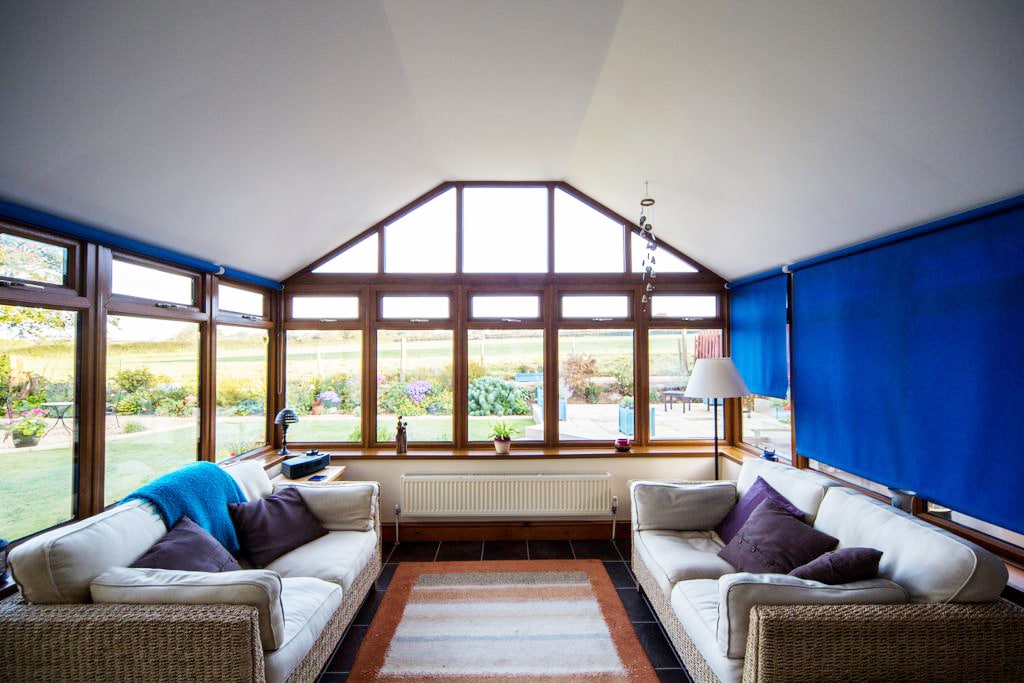
Conservatory roof insulation is a thermal barrier installed within or on top of a conservatory roof to prevent heat escaping in winter and entering in summer. The roof is the largest surface area of a conservatory and accounts for 75% of total heat loss. Without insulation, a conservatory is too cold from October to April and too hot from June to August.
Standard polycarbonate roofs have a U-value of 3.0 W/m2K. Single-glazed glass roofs measure 5.0 W/m2K. These values mean heat passes through rapidly. A properly insulated conservatory roof achieves 0.15 to 0.18 W/m2K - a 90% to 95% improvement. This single upgrade transforms the space into a functional room usable in every season.
What Are U-Values and How Do They Affect Your Conservatory?
A U-value measures how much heat passes through one square metre of a material per degree of temperature difference. Lower U-values mean better insulation. The unit is watts per square metre kelvin (W/m2K).
Current building regulations require new conservatory roofs to achieve a U-value of 0.18 W/m2K or lower. Here is how common conservatory roof materials compare:
- Single-glazed glass: 5.0 W/m2K - virtually no thermal resistance
- Polycarbonate (16 mm): 3.0 W/m2K - minimal thermal resistance
- Double-glazed glass: 1.2 W/m2K - moderate improvement
- Internal insulation panel: 0.3 to 0.5 W/m2K - significant improvement
- Full conservatory roof replacement: 0.15 to 0.18 W/m2K - maximum performance
A conservatory with a U-value of 0.15 W/m2K retains 20 times more heat than one with a polycarbonate roof at 3.0 W/m2K. The difference is immediately noticeable. Homeowners consistently report that the space feels like a real room rather than a seasonal add-on.
What Are the 4 Main Conservatory Roof Insulation Methods?
1. Full Conservatory Roof Replacement
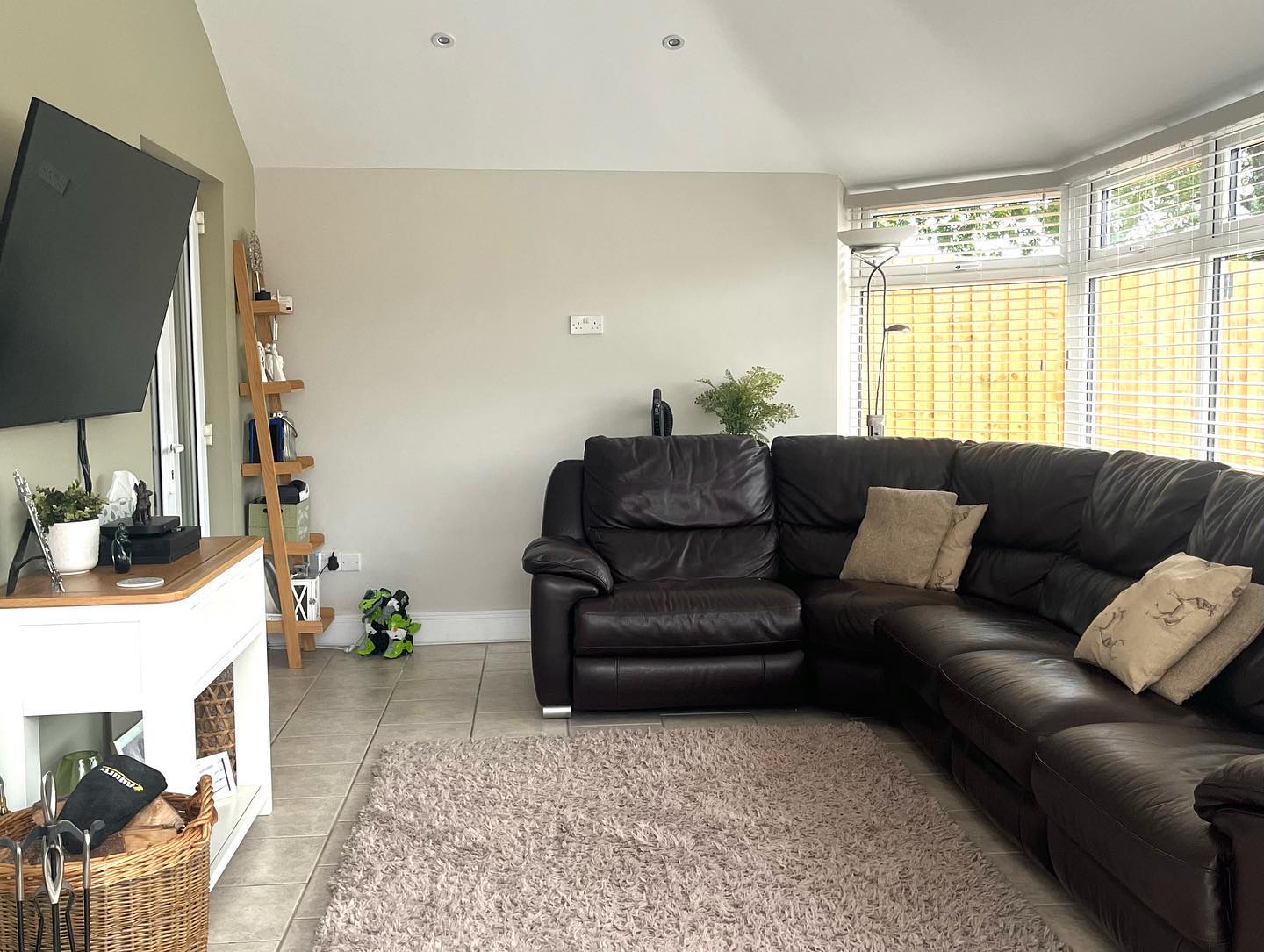
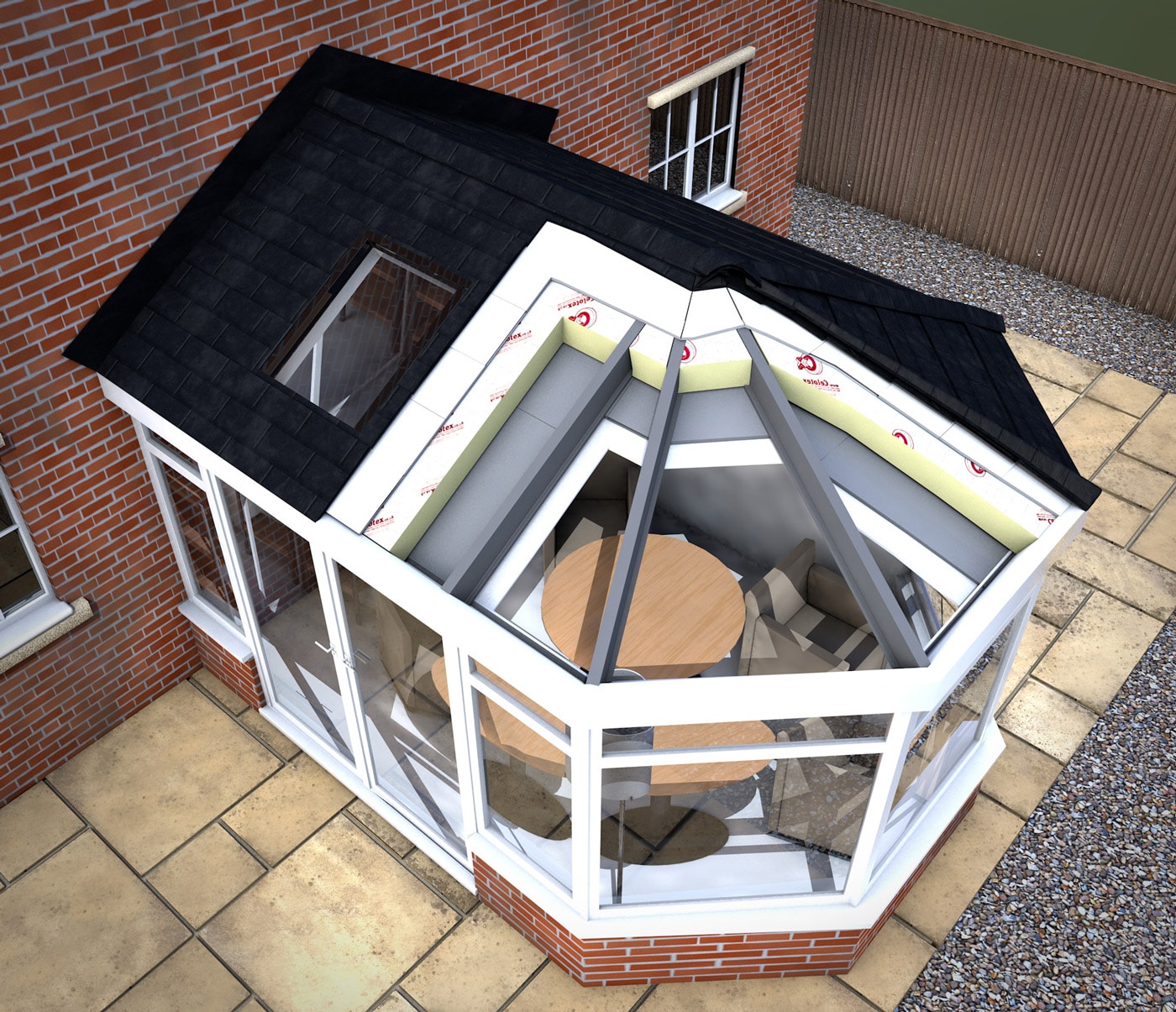
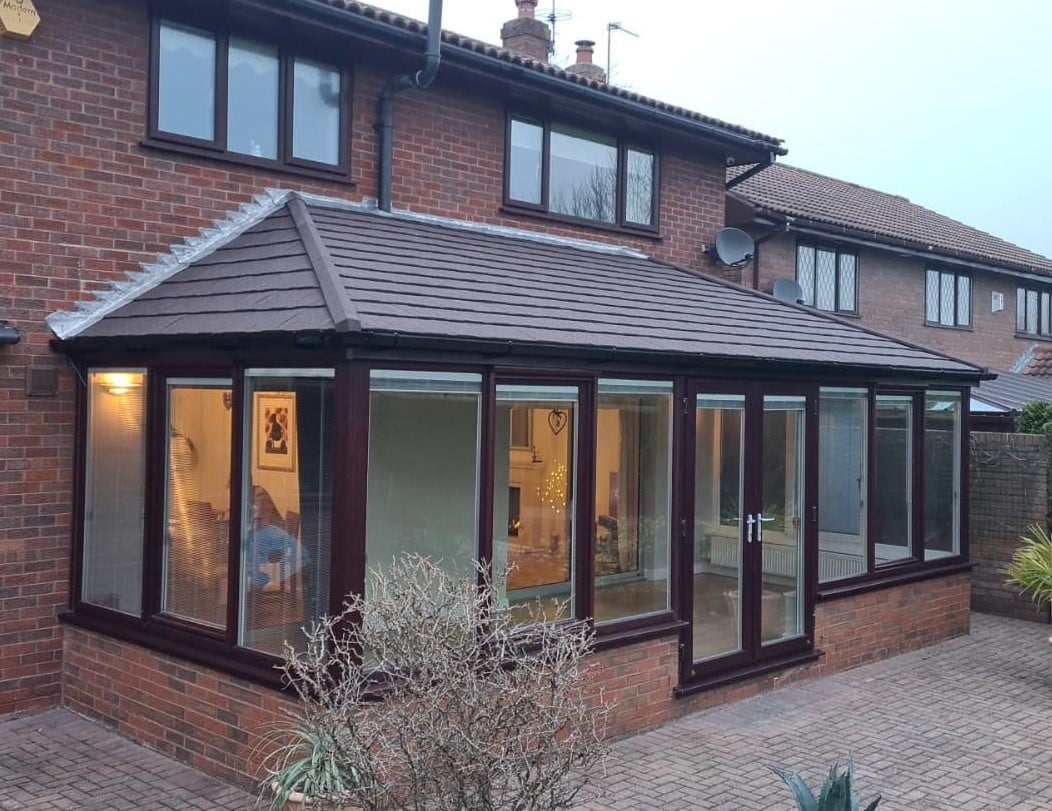
Full roof replacement removes existing panels and installs a new insulated roof structure. This method achieves the best U-values (0.15 to 0.18 W/m2K) and provides a completely new ceiling finish. Options include tiled conservatory roofs with slate-effect tiles and solid conservatory roofs with insulated panels.
It is the most effective insulation method and the only option that meets current building regulations for new construction. Installation takes 3 to 5 days. Popular certified systems include the Leka roof system, which delivers independently tested insulation performance. Request a free quote for an accurate cost for your conservatory.
2. Internal Insulated Ceiling Panels
Internal panels fit beneath existing polycarbonate or glass roofs. Rigid insulation boards (25 mm to 50 mm thick) are bonded to a lightweight aluminium frame suspended below the existing roof. The underside is finished with a fabric or plasterboard lining.
This method achieves U-values of 0.3 to 0.5 W/m2K and installs in 1 to 2 days. Internal panels are a budget-friendly option that delivers noticeable improvement without removing the existing roof.
3. Spray Foam Insulation
Spray foam is applied directly to the underside of existing polycarbonate panels. The foam expands to fill gaps and creates an insulating layer 30 mm to 50 mm thick. This method achieves U-values of approximately 0.5 to 0.7 W/m2K.
Spray foam installs in a single day. It is the cheapest option but provides the least improvement. It also voids polycarbonate panel warranties and cannot be reversed. Spray foam is not recommended as a long-term solution because it does not meet building regulations standards.
4. Multi-Foil Insulation
Multi-foil insulation uses layers of reflective foil separated by wadding. The foil reflects radiant heat while the wadding traps air. This method suits conservatories where headroom is limited because the material is only 20 mm to 40 mm thick.
Multi-foil achieves U-values of 0.35 to 0.6 W/m2K when properly installed. Installation takes 1 to 2 days. Multi-foil works best as part of a layered approach rather than a standalone solution.
How Much Energy Does Conservatory Roof Insulation Save?
Energy savings from conservatory roof insulation depend on the starting U-value, the insulation method chosen, and how much the conservatory is heated. The heat loss reduction is directly proportional to the improvement in U-value - upgrading from polycarbonate (U-value 3.0) to a full insulated replacement (U-value 0.16) can reduce heat lost through the roof by more than 90%.
Full conservatory roof replacement delivers the greatest energy saving and the fastest payback period when heating costs are factored in. The noticeable savings on annual heating costs, combined with any property value increase, make the investment worthwhile for most homeowners.
Which Insulation Method Is Best for Your Conservatory?
The best insulation method depends on 3 factors: budget, target performance, and whether you want to keep the existing roof structure.
Best overall performance: Full conservatory roof replacement achieves the lowest U-values and creates a genuine year-round living space. This option is ideal for homeowners planning to use the conservatory daily as a living room, dining room, or home office.
Best budget option: Internal insulated ceiling panels deliver significant improvement at a lower cost. Suitable for homeowners who want improved comfort without the investment of a full replacement.
Not recommended: Spray foam insulation offers the lowest cost but provides the weakest performance, voids existing warranties, and does not meet building regulations. It is a short-term fix rather than a lasting solution.
For detailed pricing across all options, visit our conservatory roof replacement cost guide.
What About Condensation and Ventilation?
Insulation changes the moisture dynamics of a conservatory. Warmer internal surfaces reduce condensation on the ceiling - a common problem with uninsulated polycarbonate roofs during winter.
All full conservatory roof replacement systems include integral vapour barriers that prevent moisture entering the insulation layer. Ventilation is maintained through trickle vents in windows and doors. Some systems include ridge ventilation to ensure airflow above the insulation layer.
Internal panel systems require careful attention to vapour management. Panels must seal tightly to prevent warm moist air reaching the cold outer roof surface. Professional installation ensures correct fitting and long-term performance.
How Do I Get a Free Assessment for Conservatory Roof Insulation?
Request a free assessment by calling 0151 453 9786 or completing the contact form on this page. A surveyor evaluates your existing roof, measures heat loss, and recommends the most effective insulation approach for your property and budget.
The free survey takes 45 to 60 minutes. A detailed quotation arrives within 24 hours. All quotes include materials, labour, and guarantees with no obligation to proceed.
We serve homeowners across Liverpool, Merseyside, and the North West. Visit our conservatory roof replacement homepage to learn about all available systems. For specific system details, read about tiled conservatory roofs and solid conservatory roofs.