
Conservatory roof materials determine the thermal performance, appearance, durability, and cost of your roof replacement. This guide compares 5 main material types: polycarbonate panels, glass, composite tiles, solid insulated panels, and uPVC systems. Each option suits different budgets and requirements. Choosing the right conservatory roof material transforms your space into a year-round living space with optimal comfort and energy efficiency.
What Are the Main Conservatory Roof Material Options?
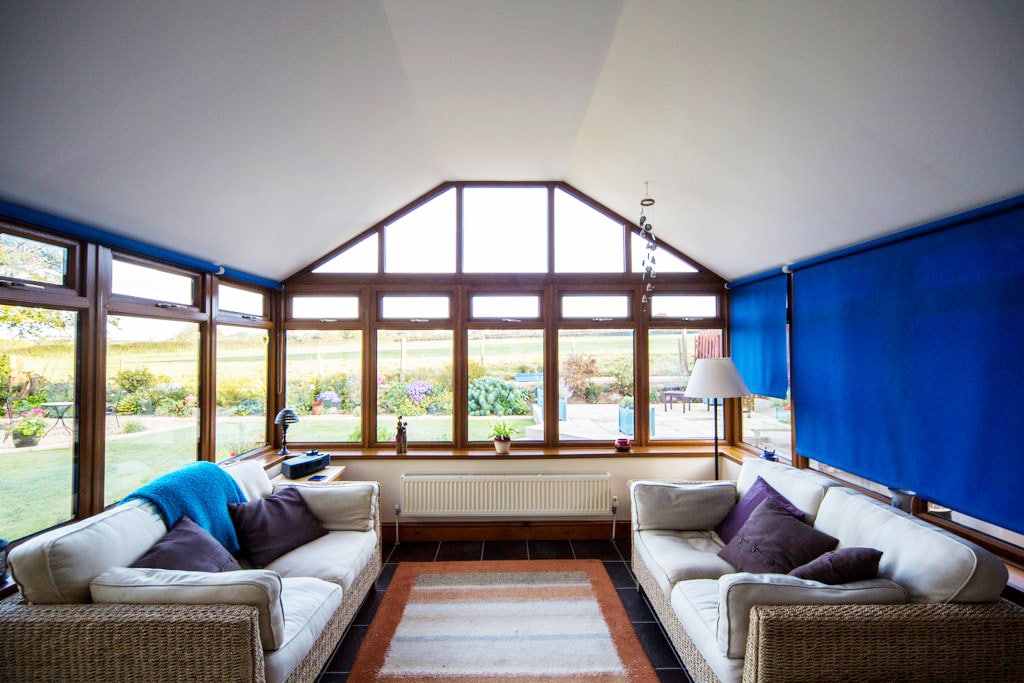
Five material categories dominate the conservatory roof replacement market. Polycarbonate represents the budget option. Glass provides light but limited insulation. Composite tiles offer a traditional roof appearance. Solid insulated panels deliver the highest thermal performance. uPVC capping and trim components complete every system.
The best material depends on 4 factors: budget, thermal requirements, aesthetic preference, and the structural capacity of existing walls. Lightweight materials suit older conservatories with smaller foundations. Heavier tiled systems require adequate structural support.
How Does Polycarbonate Perform as a Conservatory Roof Material?
Polycarbonate panels are the most common existing conservatory roof material in UK homes. Approximately 70% of conservatories built between 1990 and 2010 use polycarbonate roofing. The material is lightweight at 2 to 3 kg per square metre and inexpensive.
However, polycarbonate has significant drawbacks. U-values range from 1.6 to 2.0 W/m2K - far above current building regulation standards of 0.18 W/m2K. This poor insulation creates extreme temperatures: 40°C+ in summer and near-freezing in winter. Rain noise on polycarbonate panels reaches 80+ decibels. Discolouration occurs within 8 to 12 years. Most homeowners seeking conservatory roof replacement are upgrading from polycarbonate to a modern insulated system.
Is Glass a Good Choice for Conservatory Roof Replacement?
Glass conservatory roof panels offer better performance than polycarbonate but lag behind solid options. Self-cleaning glass reduces maintenance. Low-emissivity coatings improve thermal performance to U-values of 1.0 to 1.2 W/m2K. Glass maintains natural light better than any other material.
The downsides include higher cost than polycarbonate, solar gain causing overheating in south-facing spaces, and weight of 20 to 25 kg per square metre. Glass does not achieve the 0.18 W/m2K U-value required by building regulations for habitable room conversions. For homeowners wanting maximum light, a hybrid conservatory roof with glass sections and insulated solid panels provides the best balance.
What Are the Benefits of Composite Tile Conservatory Roofs?
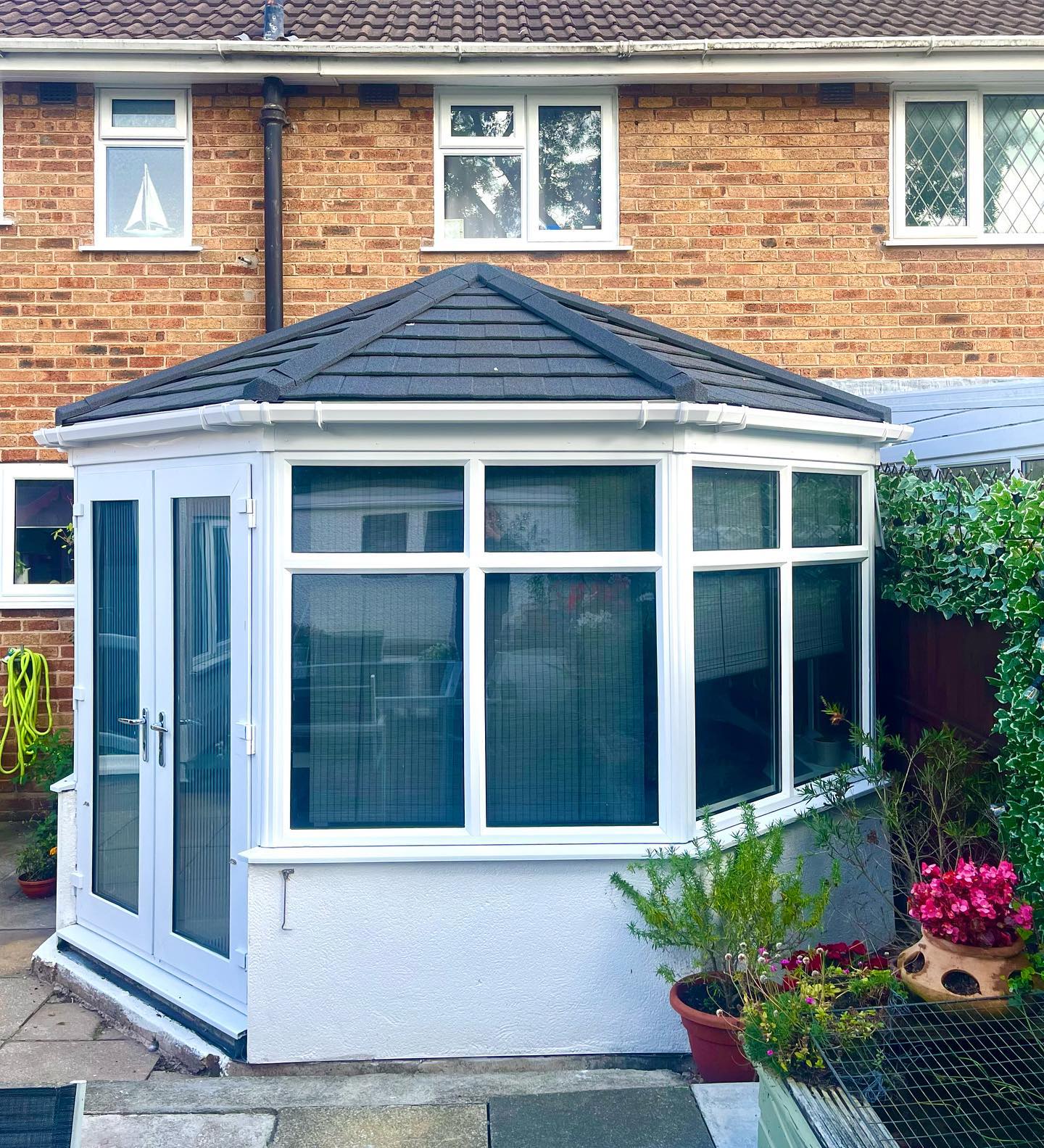
Composite tiles replicate the appearance of natural slate or clay tiles at a fraction of the weight. Materials include recycite (recycled plastic), lightweight concrete blends, and fibre-cement composites. Weight ranges from 15 to 20 kg per square metre - approximately 60% lighter than natural slate.
Popular composite tile brands include Tapco slate, Metrotile, and Britmet. These tiles interlock for a weatherproof finish and come in 8 to 12 colour options including slate grey, terracotta, charcoal, and rustic brown. Lifespan exceeds 40 years with zero maintenance. Tiled conservatory roofs suit replacement projects where a traditional roofline appearance is the priority.
How Do Solid Insulated Panels Compare?
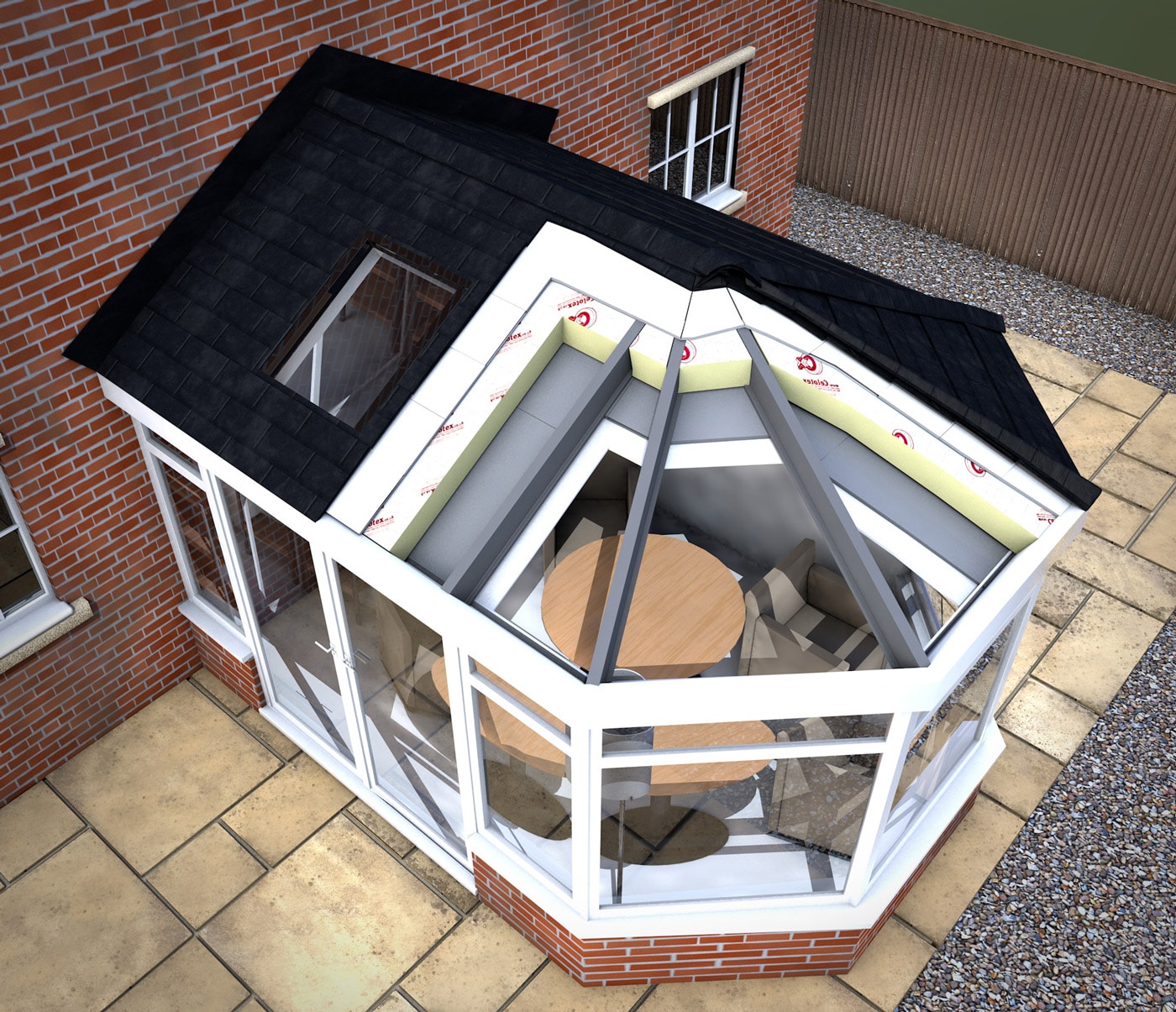
Solid insulated panels deliver the highest thermal performance of any conservatory roof material. Systems like Leka and Supalite use rigid insulation cores sandwiched between structural boards. U-values reach 0.15 to 0.18 W/m2K - matching or exceeding modern house roofs.
Panel systems install faster than tiled alternatives (2 to 3 days versus 4 to 5 days). Weight ranges from 25 to 35 kg per square metre. Internal finishes include plasterboard for a plastered ceiling identical to a standard room. The result is a year-round living space indistinguishable from a built extension. See our solid conservatory roofs page for full specification details.
How Do Conservatory Roof Materials Compare on Thermal Performance?
What Does Each Conservatory Roof Material Cost?
The cost of a conservatory roof replacement depends on the material chosen, the size of the roof, and the complexity of the installation. Polycarbonate is the least expensive option; composite tiles and solid insulated panels represent a more significant investment that delivers building-regulations-compliant performance in return. Request a free quote for an accurate price based on your conservatory size and preferred material, or visit our conservatory roof cost guide for a general overview.
Which Conservatory Roof Material Is Right for Your Home?
The right material depends on your priorities. For maximum thermal performance and a year-round living space, composite tiles or solid insulated panels are the best choice. Both achieve U-values of 0.15 to 0.18 W/m2K and meet building regulations for habitable room conversion.
For budget-conscious homeowners, a solid panel system provides excellent value. For those wanting a traditional appearance matching the main house roof, composite tiles in slate grey or terracotta create a seamless look. For maximum natural light, a hybrid system combining solid panels with glass sections offers the best balance. Browse our conservatory roof ideas guide for design inspiration and colour options to help you choose the right finish for your property.
Every conservatory roof replacement begins with a free survey. We assess your existing structure, measure accurately, and recommend materials suited to your property and budget.