
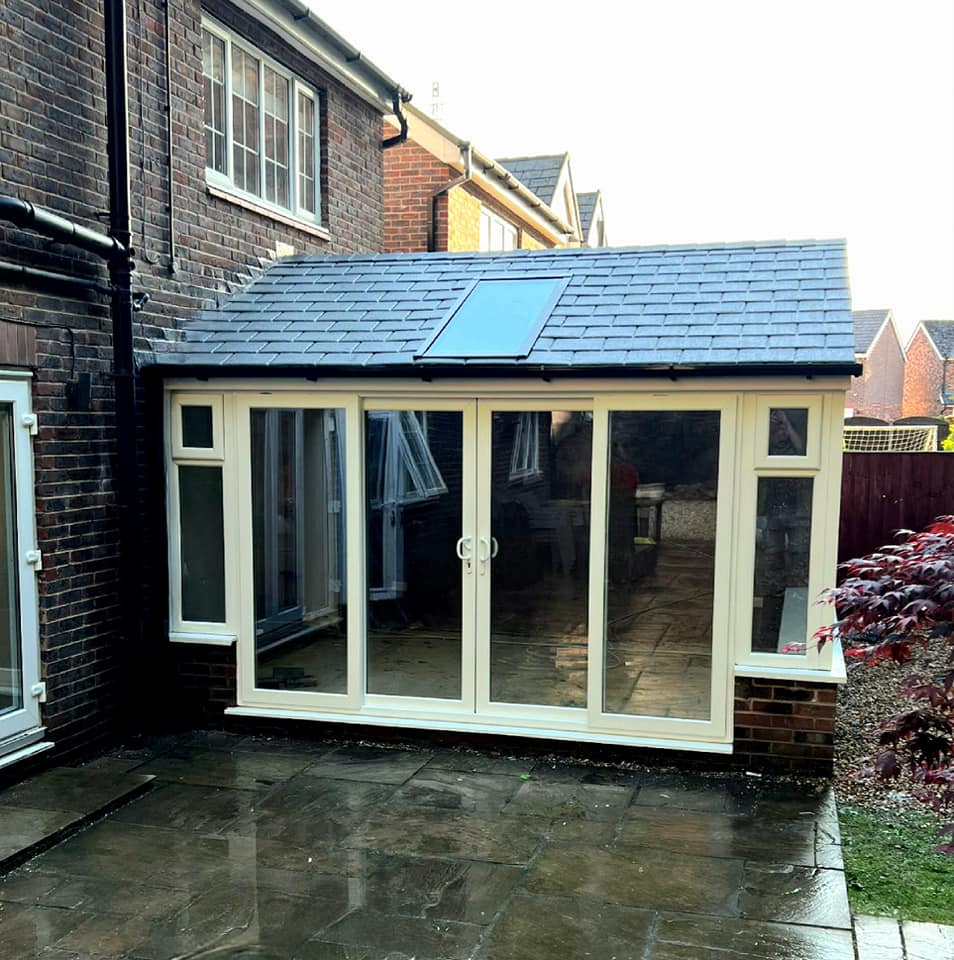
A conservatory that is too hot in summer is the number 1 complaint from UK homeowners with polycarbonate or glass roofs. Internal temperatures exceed 40°C on sunny days because the roof acts as a greenhouse, trapping solar heat with no effective way to release it. This guide explains the science behind overheating and ranks 5 solutions from temporary fixes to the permanent answer - conservatory roof replacement.
Why Does Your Conservatory Overheat in Summer?
Overheating occurs because of solar gain. Short-wave solar radiation passes through glass or polycarbonate panels and heats internal surfaces (flooring, furniture, walls). These surfaces re-emit the energy as long-wave infrared radiation. Glass and polycarbonate block infrared from escaping, trapping heat inside - the same principle that powers a greenhouse.
On a 25°C summer day in Liverpool, a conservatory with a polycarbonate roof reaches 40°C to 45°C internally. South-facing and west-facing conservatories receive the most direct sunlight and overheat the most. The problem intensifies in the afternoon when solar radiation peaks between 1:00 PM and 4:00 PM.
A polycarbonate conservatory roof transmits 80% of solar energy. Glass transmits 75%. Neither material provides meaningful insulation - U-values range from 1.0 to 2.0 W/m2K. By comparison, a modern insulated conservatory roof transmits 0% of solar energy through its solid sections and achieves U-values of 0.15 to 0.18 W/m2K.
What Are the 5 Best Solutions for an Overheating Conservatory?
Solution 1: Conservatory Roof Replacement (Permanent Fix)
Conservatory roof replacement eliminates overheating permanently. Replacing polycarbonate or glass with an insulated tiled conservatory roof or solid roof blocks 100% of solar radiation through the roof. Internal temperatures stay between 18°C and 22°C in all seasons. This is the only solution that creates a genuine year-round living space.
Installation takes 3 to 5 days. The new conservatory roof also solves winter cold, rain noise, and glare simultaneously. Property value sees a measurable increase. Of all 5 solutions, roof replacement provides the best long-term value. Request a free quote to find out what this would cost for your conservatory.
Solution 2: Roof-Mounted Insulation Panels
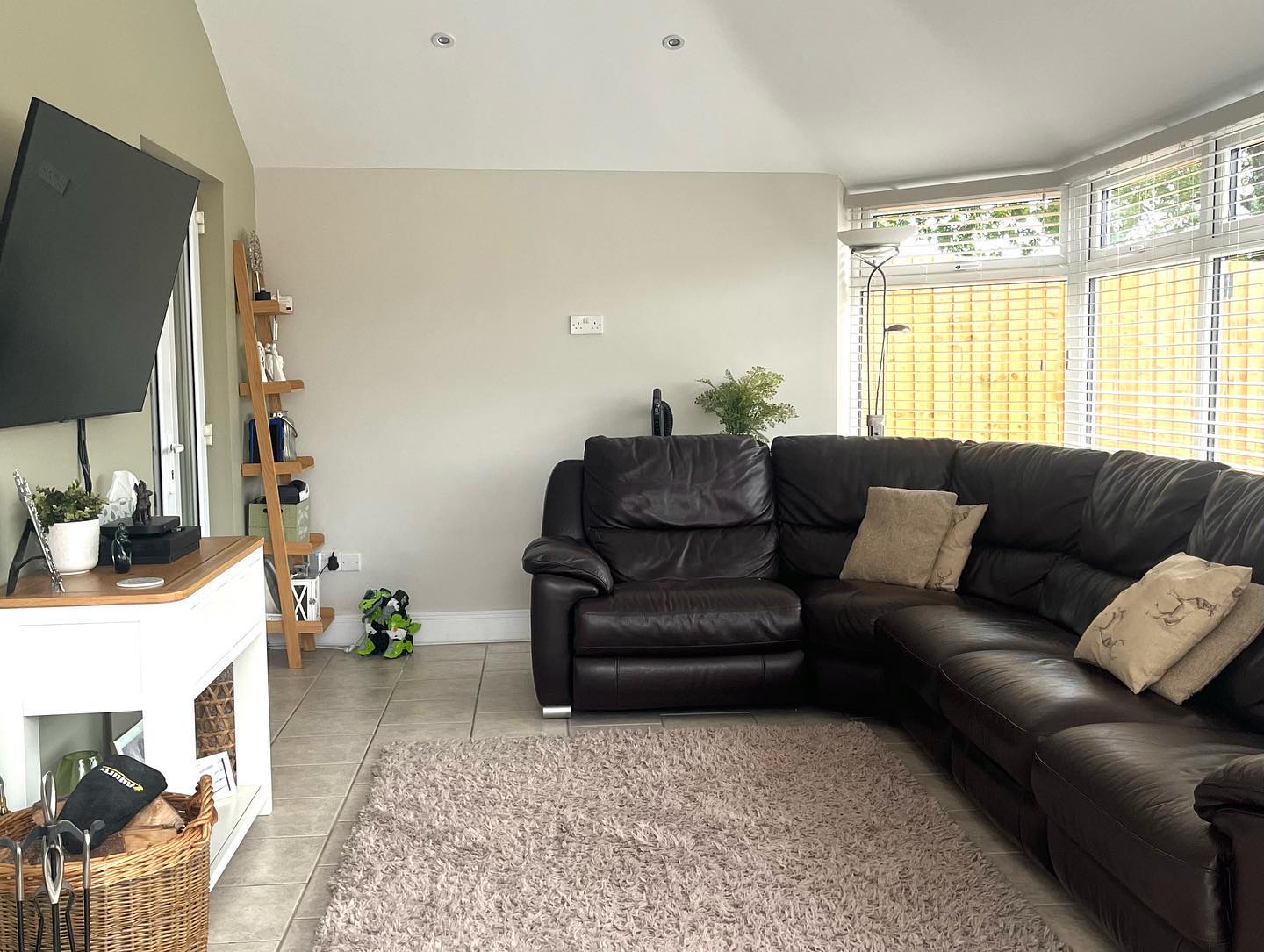
Insulation panels fitted beneath the existing conservatory roof reduce solar gain by 60% to 70% through improved conservatory roof insulation. Rigid foam boards with reflective foil faces are cut to fit between the existing glazing bars.
This solution reduces peak temperatures by 10°C to 15°C. It does not achieve building regulation standards and does not qualify the space as a habitable room. Light is reduced significantly. It works as a mid-range option for homeowners not yet ready for full conservatory roof replacement.
Solution 3: Blinds and Shading
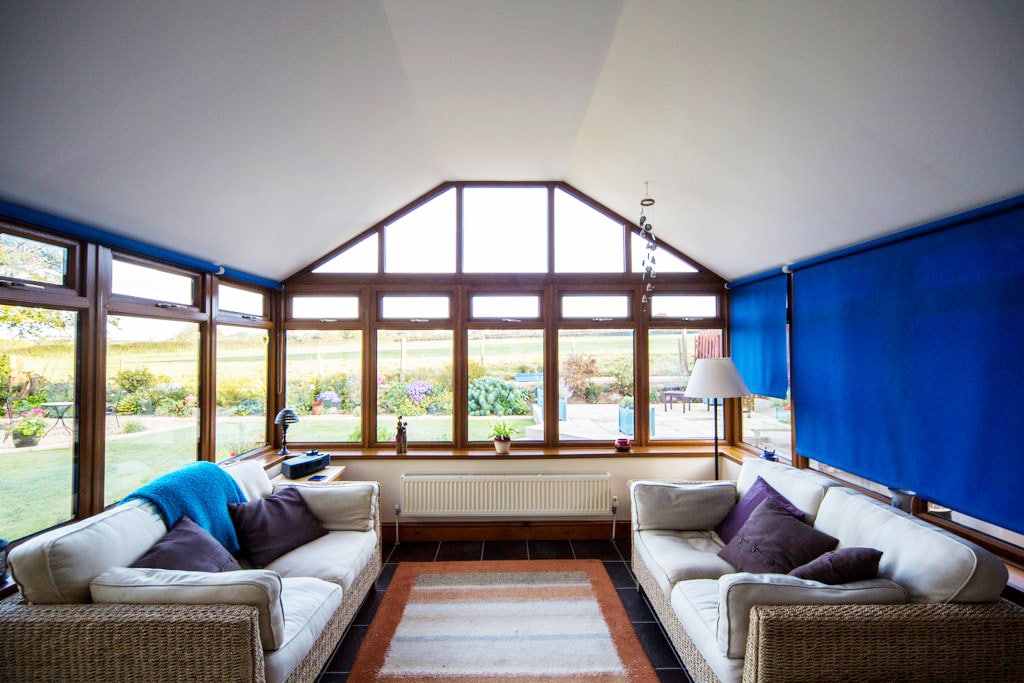
Roof blinds reduce solar gain by 30% to 40% when closed. Pleated blinds, roller blinds, and sail blinds are available for most conservatory shapes.
Blinds reduce glare effectively but only partially address heat. The space remains 8°C to 12°C hotter than outdoor temperature. They do not solve winter cold, noise, or insulation. The improvement is temporary and the conservatory remains uncomfortable on the hottest days.
Solution 4: Ventilation Systems
Roof vents, opening windows, and mechanical ventilation extract hot air from the conservatory. Options include passive ridge vents, mechanical extraction fans, and air conditioning units.
Ventilation removes hot air but cannot prevent solar gain. Opening vents on a 35°C day brings in 35°C air - the space remains hot. Air conditioning can be effective but does not address the root cause. This solution treats the symptom, not the problem.
Solution 5: Window Film
Solar reflective film applied to polycarbonate or glass panels reflects a portion of solar energy. Film reduces solar gain by 20% to 35%.
Film provides a modest improvement. Peak temperatures drop by 5°C to 8°C. The film reduces natural light and gives the roof a tinted appearance. Lifespan is 5 to 10 years before bubbling and peeling occurs. This is the least effective long-term solution.
How Do These Solutions Compare on Temperature Reduction?
Why Is Conservatory Roof Replacement the Permanent Fix?
Conservatory roof replacement addresses the root cause of overheating - the transparent roof. An insulated solid conservatory roof or tiled system blocks solar radiation entirely through its opaque structure. The insulation layer (0.15 to 0.18 W/m2K) prevents external heat from transferring inward during summer and prevents internal heat from escaping during winter.
The result is a stable internal temperature regardless of external conditions. On a 30°C Liverpool summer day, the conservatory stays at 20°C to 22°C. On a -5°C winter day, the space maintains 18°C to 20°C with standard heating. No other solution achieves this dual-season performance. The conservatory becomes a genuine year-round living space.
Before proceeding, check our guide on planning permission for conservatory roof replacement. Request a free quote and free survey to find the right solution for your overheating conservatory. Call 0151 453 9786 or book a consultation online.