
A leaking conservatory roof has five possible causes - failed glazing bar seals, cracked polycarbonate panels, failed flashing, gutter overflow, or ridge cap failure - and identifying the source determines whether repair or full replacement is the right solution. Liverpool's wet climate means conservatory roofs face constant water ingress pressure. Some leaks are straightforward to fix with targeted repairs; others signal that the roof has reached end of life and that cumulative repair costs are approaching the cost of a full replacement. This guide helps you diagnose the source and make the right call.
What Are the Most Common Causes of a Leaking Conservatory Roof?
There are five primary causes of conservatory roof leaks, each with a different location and repair approach:
- Failed glazing bar seals (most common): The rubber gaskets and foam seals within uPVC or aluminium glazing bars degrade over time, shrinking and cracking. Water tracks down the glazing bar channels and drips inside the conservatory. This is the most frequent cause of leaks in conservatories over 8 years old.
- Cracked or split polycarbonate panels: UV degradation makes polycarbonate brittle, and impact from hailstones, falling branches, or thermal stress causes cracks. Water enters directly through the crack or along the fracture line. Common in roofs over 10 years old.
- Failed flashing at the house wall junction: Lead, aluminium, or uPVC flashing seals the joint between the conservatory roof and the main house wall. If the flashing lifts, cracks, or separates from the wall surface, rainwater runs down the wall and enters at the junction. Often mistaken for a window or wall leak rather than a roof leak.
- Blocked or overflowing gutters: When gutters block with leaf debris, water backs up and overflows into the roof structure rather than draining away. This causes water to pool at low points and find entry through gaskets and seals that would otherwise be watertight.
- Ridge cap failure: The ridge cap seals the apex of a pitched roof. Sealant shrinks and cracks over time, and the cap itself can lift in high winds. Water enters at the ridge and runs down the inside of the roof panels. Less common than glazing bar failure but can cause significant water ingress.
How Do You Find Where a Conservatory Roof Is Leaking?
Locating the source of a conservatory roof leak requires a methodical approach. Start by observing where the water appears inside the conservatory - a drip directly beneath a glazing bar almost always indicates glazing bar seal failure; a drip near the house wall is more likely to be flashing or a blocked gutter; water at the apex suggests ridge cap failure.
A hosepipe test is the most effective diagnostic tool. With a second person inside observing, direct a steady flow of water along each glazing bar from the bottom up, pausing at joints and seals. When the internal drip appears, you have found the entry point. Check the flashing separately by running water along the wall junction from above the flashing line downward. Inspect gutters visually and clean them before assuming the roof itself is the problem - a surprising number of apparent roof leaks are caused entirely by blocked gutters directing water backwards. If you cannot locate the source yourself, a professional survey will identify the point of entry without causing damage to the roof.
Can a Leaking Conservatory Roof Be Repaired?
Yes - specific, isolated failures can be repaired cost-effectively. Replacing degraded glazing bar seals, resealing or replacing a failed flashing, replacing a single cracked polycarbonate panel, or clearing and reseating a ridge cap are all targeted repairs that can resolve isolated leak points. Contact us for a free quote to understand what a repair would cost for your specific situation.
These repairs are appropriate when the roof is relatively young, the failure is genuinely isolated, and the rest of the roof structure is in good condition. However, repairs are temporary solutions in most cases. Glazing bar seals that have degraded in one location will typically degrade in others within the same season, because the age of the material is the underlying cause rather than a specific mechanical failure. Targeted repairs on an old roof tend to become a cycle of repeated expenditure without addressing the root problem.
When Is Roof Replacement Better Than Repair?
Roof replacement becomes the better option when three conditions are met: the roof is over 10 years old, multiple leak points exist or are recurring, or the polycarbonate panels show visible yellowing or cracking across more than a small area. In these situations, the underlying cause is material degradation across the whole roof rather than a single point failure. Repairing one location simply redirects water to the next weakest point.
There is also a financial threshold at which repair costs approach replacement costs. When repairs have been carried out more than twice in the past three years, the economics shift in favour of replacement. A full insulated roof replacement eliminates all glazing bars, all polycarbonate panels, and all the seal and flashing points that cause leaks - replacing them with a single solid weatherproof structure that has no equivalent failure points. For more on the conversion process, see our conservatory roof conversion page.
How Much Does It Cost to Repair a Leaking Conservatory Roof?
Repair costs vary significantly depending on the type and extent of the failure. The key comparison is between multiple repair visits over the remaining lifespan of the old roof versus a single replacement that eliminates all future leak risk for 40 or more years. Request a free quote to get an accurate cost for your specific situation, or see our conservatory roof cost guide for a breakdown of full replacement options.
What Are the Long-Term Risks of Not Fixing a Leaking Conservatory Roof?
Leaving a conservatory roof leak unaddressed carries serious risks beyond the immediate nuisance of water inside the space. Persistent moisture damages internal finishes - plasterwork, timber flooring, furniture, and fitted items are all vulnerable. Mould growth begins within 24 to 48 hours of water contact with porous materials and, once established in wall cavities or under flooring, is costly to remediate and a potential health risk.
Structural risks are also significant. Where water contacts the timber wall plate or roof structure over an extended period, rot develops. Where it contacts electrical wiring or fittings, there is a risk of short circuit or, in extreme cases, fire. Home insurance policies typically require that known defects are addressed promptly; a long-standing unrepaired leak that causes subsequent damage may result in a claim being rejected on the grounds that the policyholder failed to take reasonable steps to prevent it.
Does a New Conservatory Roof Prevent Future Leaks?
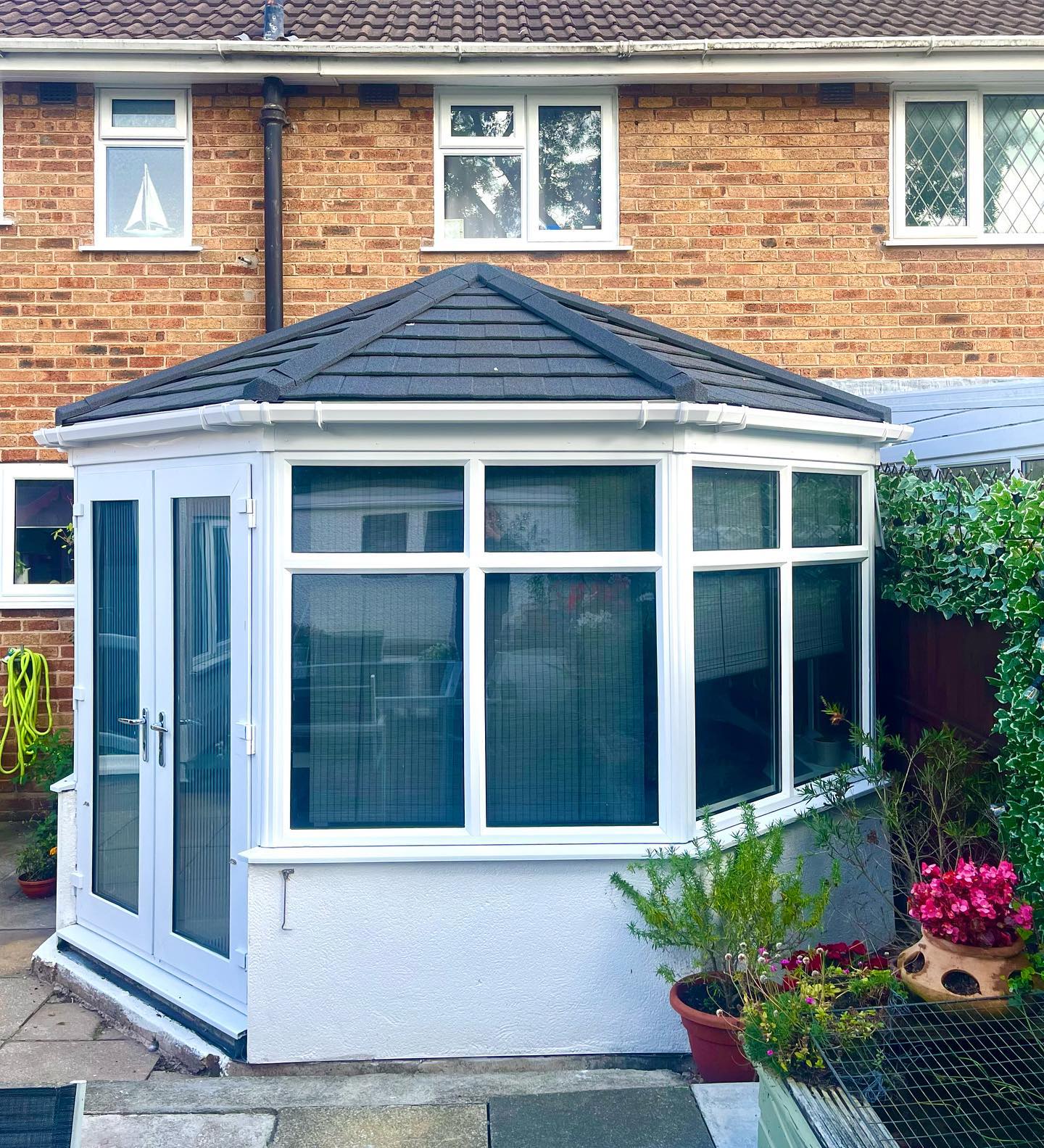
Yes - a professionally installed insulated tiled roof eliminates the structural causes of conservatory roof leaks entirely. Insulated roof systems have no polycarbonate panels to crack, no glazing bar seals to degrade, and no ridge cap sealant to shrink. The roof is a solid weatherproof structure with the same leak resistance as the main house roof, using proper lead flashing at the wall junction and a continuous weatherproof tile or covering externally.
Our installations carry a 10-year workmanship guarantee and 40-year manufacturer's warranty on the roof system. In over 2,000 installations across Liverpool and Merseyside, we have not had a single leak callback attributable to the new roof structure. The only maintenance required is the same as any tiled roof: clear gutters annually and check flashings every five years. For more detail on the tiled roof systems we install, see our tiled conservatory roofs page.