
Both polycarbonate and glass conservatory roofs are significantly inferior to modern insulated conservatory roof systems - polycarbonate is cheaper but noisier, glass is quieter but heavier and more expensive, but neither provides adequate insulation for year-round use. This comparison is important for Liverpool homeowners deciding what to do with an ageing conservatory. Understanding the real performance data for each option - and how both compare to a modern insulated replacement - makes the decision straightforward.
What Is a Polycarbonate Conservatory Roof?
Polycarbonate conservatory roofs use multi-wall polycarbonate panels - typically 16mm, 25mm, or 35mm in thickness - fitted into aluminium or uPVC glazing bars. They were the standard material for conservatory roofs throughout the 1980s and 1990s because of their low cost, light weight, and ease of installation. A 16mm twin-wall polycarbonate panel has a U-value of approximately 2.0 W/m2K, while a 35mm five-wall panel achieves around 1.6 W/m2K.
For comparison, current building regulations require a maximum U-value of 0.18 W/m2K for a roof forming part of the thermal envelope. Polycarbonate panels at 1.6-2.0 W/m2K are between 8 and 11 times worse than this standard. Additionally, polycarbonate transmits around 80% of incoming solar energy, which causes extreme overheating in summer. Yellowing, crazing, and brittleness are also common after 10-15 years of UV exposure, leading to structural failure of individual panels.
What Is a Glass Conservatory Roof?
Glass conservatory roofs use sealed double or triple-glazed units fitted into purpose-made roof glazing bars. They offer a more premium aesthetic than polycarbonate and are typically specified on higher-value conservatories. A standard double-glazed roof unit achieves a U-value of around 1.4 W/m2K, while a triple-glazed unit with a warm-edge spacer bar can reach approximately 1.0 W/m2K. Both are significantly superior to polycarbonate but still fall well short of current building regulations standards.
Glass roofs are substantially heavier than polycarbonate - a typical 6mm toughened glass unit weighs around 15 kg/m2 compared to under 4 kg/m2 for polycarbonate. This additional loading must be accounted for in the structure. Glass roofs also carry a higher risk of seal failure in the glazed units over time, leading to condensation between the panes and localised insulation degradation. The initial cost of a glass roof is considerably higher than polycarbonate, making a like-for-like replacement costly relative to the performance improvement achieved.
How Do Polycarbonate and Glass Roofs Compare on Thermal Performance?
Neither polycarbonate nor glass provides adequate thermal performance for a conservatory to function comfortably year-round. The table below summarises the key performance metrics across all three roof types:
| Metric | Polycarbonate | Glass | Insulated Tiled |
|---|---|---|---|
| U-value (W/m2K) | 1.6 - 2.0 | 1.0 - 1.4 | 0.15 - 0.18 |
| Weight (kg/m2) | 3 - 5 | 13 - 18 | 18 - 25 |
| Rain noise | Very loud (80dB+) | Moderate (60dB+) | Quiet (below 30dB) |
| Typical lifespan | 10 - 15 years | 20 - 25 years | 40+ years |
| Typical cost | Low | Medium-High | Medium |
Which Is Noisier - Polycarbonate or Glass?
Polycarbonate is significantly noisier than glass in rain. The thin, hollow-celled structure of polycarbonate panels resonates with rainfall, generating noise levels in excess of 80 decibels directly beneath the roof in heavy rain - comparable to standing next to a busy road. This makes the space unusable during wet weather, which in Liverpool is a significant proportion of the year.
Glass is considerably better: the solid material dampens impact noise more effectively, and a well-sealed glazed unit will typically generate noise levels around 60 decibels in heavy rain. This is still noticeable but tolerable for most uses. An insulated tiled roof, by contrast, has the same acoustic performance as the ceiling of an internal room - typically below 30 decibels even in heavy rain - because the insulated construction absorbs all impact sound before it reaches the internal space.
How Long Do Polycarbonate and Glass Roofs Last?
Polycarbonate conservatory roofs have a practical lifespan of 10 to 15 years. UV degradation causes yellowing and crazing of the surface, which reduces light transmission and creates an unsightly appearance. The panels also become brittle with age and are prone to cracking under impact, particularly in cold weather. Condensation within the cells of multi-wall panels is common as the end seals degrade, and this cannot be reversed without panel replacement.
Glass roofs last longer - typically 20 to 25 years before seal failure becomes widespread - but they are not indefinite. The rubber seals in double-glazed units degrade over time, allowing moisture into the cavity and causing the characteristic misty appearance. When this occurs in multiple units simultaneously, replacement becomes uneconomical. An insulated tiled roof has a structural lifespan of 40 years or more with minimal maintenance requirements. For more detail on material options and longevity, see our page on conservatory roof materials.
Is It Worth Replacing a Glass or Polycarbonate Roof?
Yes - for both polycarbonate and glass roofs, replacement with an insulated system delivers a clear improvement in every measurable area: thermal performance, noise reduction, lifespan, and property value. The payback period for the investment is typically 5 to 8 years through reduced heating costs alone, with additional returns from increased property value and the elimination of future repair and replacement costs for the existing roof.
For polycarbonate roofs, the case for replacement is particularly strong: the performance gap is so large that almost any improvement is worthwhile, and the relatively short remaining lifespan of an ageing polycarbonate roof means the comparison with a 40-year insulated system is straightforward. For glass roofs, the case is slightly less urgent but still compelling: a glass roof at 1.0-1.4 W/m2K is still 5 to 8 times worse than an insulated replacement. For a full analysis of the financial return on replacement, see our page on whether conservatory roof replacement is worth it.
What Should You Replace Your Roof With?
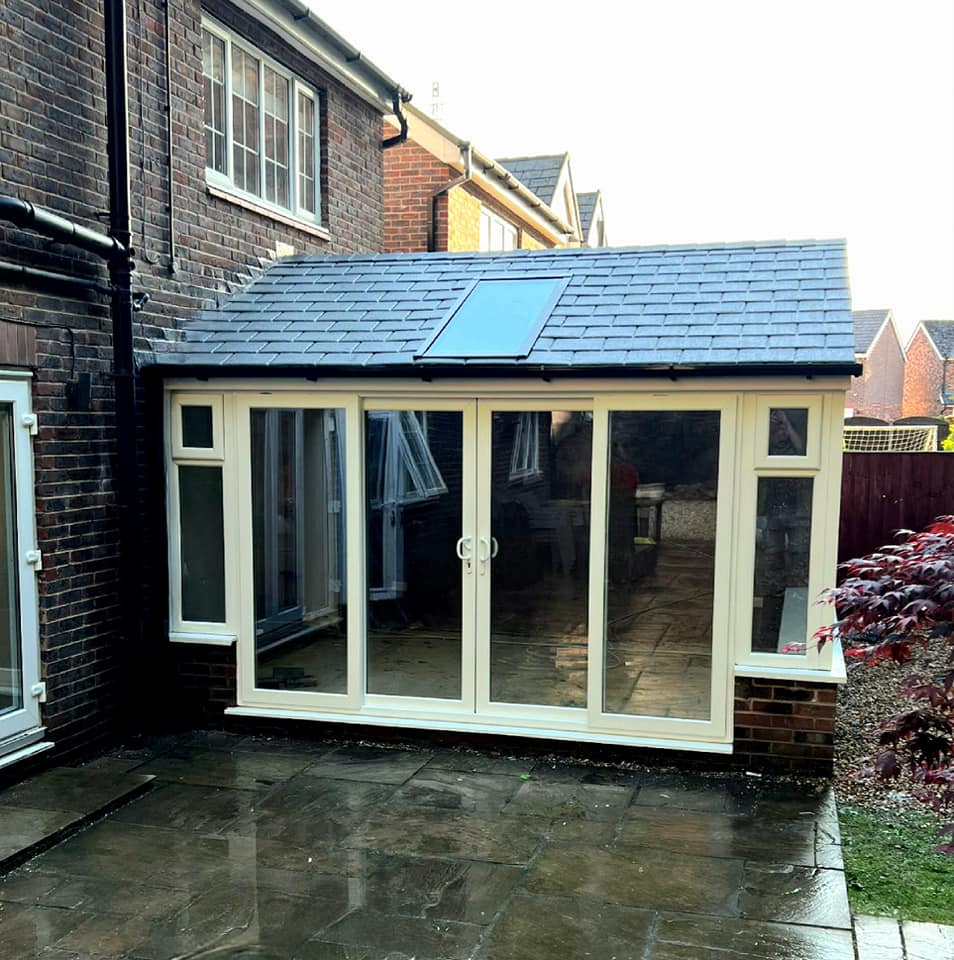
The two principal options for replacing a polycarbonate or glass roof are a tiled insulated roof system or a solid insulated flat-ceiling system. A tiled roof uses a lightweight aluminium structural frame with a solid insulated deck and a concrete or clay tile finish externally, creating an appearance identical to a traditional pitched roof. A solid roof uses a similar structural approach but with a flat internal ceiling and a variety of external finish options including felt, GRP, or a low-pitch tile.
Both options achieve U-values of 0.15 to 0.18 W/m2K, comply fully with current building regulations, and are available with 25 to 40-year guarantees when professionally installed. The choice between them is largely aesthetic and dependent on the existing design of the conservatory. To explore the tiled option in detail, see our tiled conservatory roofs page. For the solid system option, see our solid conservatory roofs page.